|
|
NEWSLETTER: AR-15 EDITION
|
|
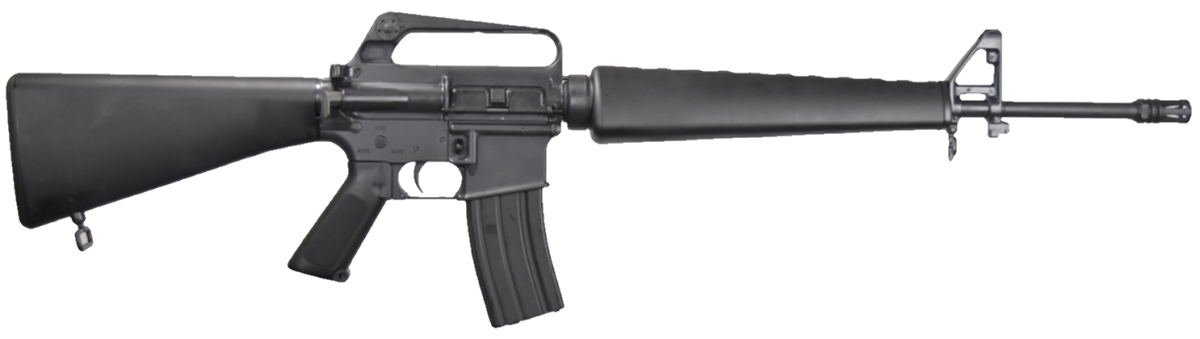
It's the most popular and controversial firearm in the nation. One of our goals at ADC is to ensure that those who own AR-style rifles own them responsibly and use them both safely and effectively.
|
|
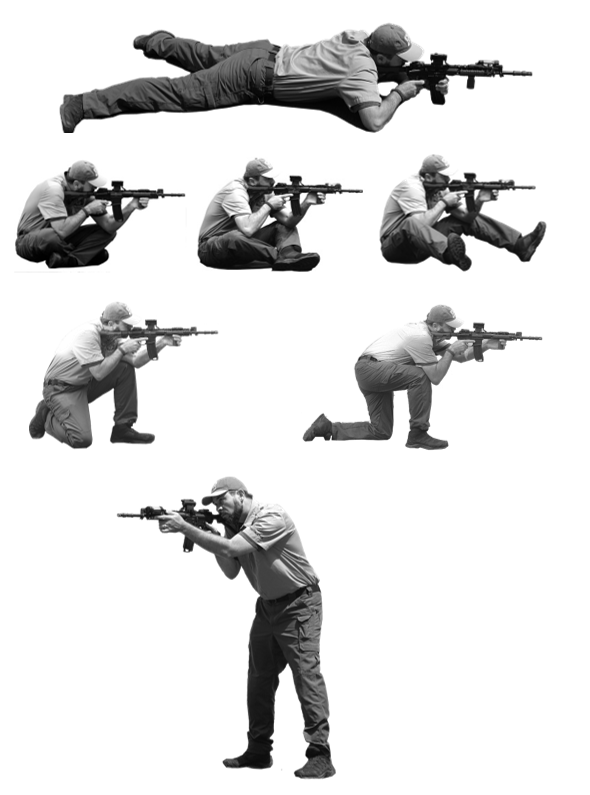
There is an important evolutionary chemistry between the configuration of the AR and the techniques used to handle and shoot it, particularly modern variants like the M4, Recce, Mk12 and Mk18. There are 4 basic shooting positions, each also have variations and combinations.
|
|
|
|
Beginning with prone, whether we are shooting precision rifle or carbine, it's best to line up straight behind the firearm. Since prone is the most inflexible position, I recommend configuring magnified optics to be optimum for this position. The various types of sitting and kneeling positions are next. Sitting is a fairly stable position, fast to get into, but slow to get out of. Kneeling is a less stable position than sitting, but it's faster to get into or out of. In both of these positions, it is easier to adapt the body to the rifle.
|
|
Lastly, offhand position, which is the position most of us spend the majority of our time shooting carbines and pistols from. Rather than a more traditional bladed stance, I recommend you use a modern isosceles position. Start with the feet both pointing downrange like you are on skis. The knees should be slightly bent, hips squarely facing the target. Bend slightly forward at the waist to put body weight behind the rifle. Shoulders should also be squared up to the target.
|
|
|
|
Now something important: instead of putting the stock out in the "pocket" of the shoulder, move it closer to the center of your chest, directly beneath your shooting eye. If your stock is extended all the way, it puts the balance of the rifle forward, away from your body and requires more muscle to hold in that position, so it's ultimately less accurate. Shorten the stock, bring the center of balance of the rifle closer to your body, this will be a less fatiguing position. These positions are optimized for use in tactical defensive (and offensive) shooting, and while wearing gear like body armor. This is also the reason modern carbine stocks have a shorter length-of-pull than people are typically used to from hunting rifles.
|
|
When it comes to optics on carbines, there are a few different options, but for close-quarters to intermediate range use, it's hard to beat a red dot for speed.
|
|
|
|
|
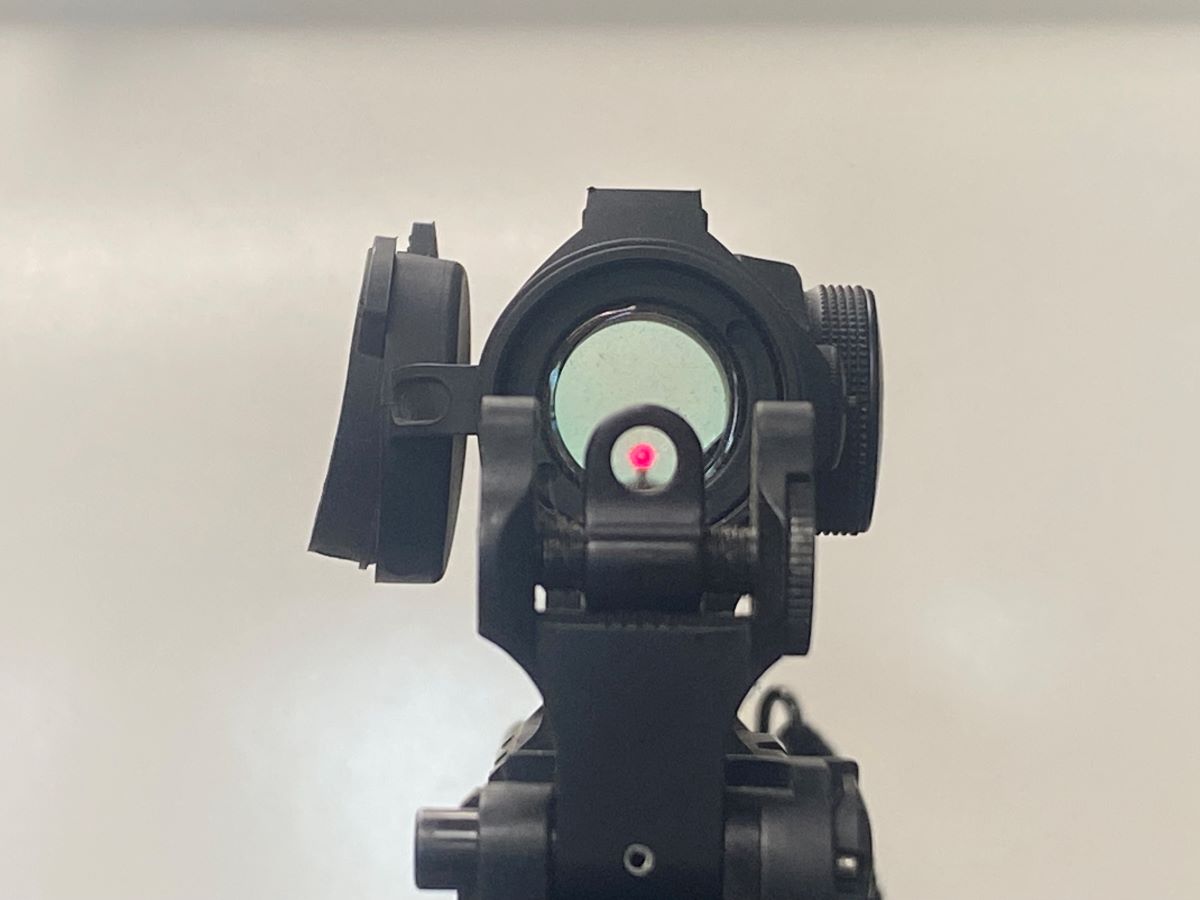
You should be able to see your iron sights through your red-dot. Shown here is a configuration called "lower 1/3 co-witness" meaning that the red dot aligns with the iron sights when looking through the lower 1/3 of the optic. You don't need to align the red dot with the iron sights while aiming, in fact, you shouldn't, when using the red dot, ignore the iron sights completely or keep them folded. If the red dot fails, then the iron sights come into play.
|
|
|
|
|
Magnified optics, including low-variable power optics are extremely versatile, but they still aren't as fast as a red dot. If you are using magnified optics and still want the speed of a red-dot, that's where mounting an additional dot sight can be useful. Usually these are mounted in an offset position on the upper receiver or on the handguard or even to the magnified optic. When engaging a close-range target, the shooter tilts the rifle and looks through the red dot. The best backup red-dots for this application are the micro-dot sights.
|
|
|
Let's talk about "lasers."
|

|
|
Let's discuss laser aiming devices. Red laser diodes don't project a dot that's bright enough to see outdoors in the daytime beyond a few yards distance. The eye is more sensitive to green light, which is why green laser diodes are visible at longer distances and in brighter ambient conditions. The darker it is, the further away you can see the projected dot. Unfortunately, the darker it is, the less you can see what the dot is projected on. If using night vision devices, infrared lasers, which aren't visible to the naked eye, can be an effective aiming device. Night vision devices and infrared lasers allowed the US Military to "own the night" early on in the Global War on Terror. Then, the enemy figured out that most consumer-grade camcorders are infrared sensitive and can be used to trace even "invisible" infrared lasers back to their point of origin. That's the big issue with lasers; since they project light, they are a big neon sign letting potential aggressors know where you are. We also have to be careful because movies have trained us that laser sights can be used to effectively intimidate a potential attacker, but, that might encourage people to point guns at folks when lethal force isn't necessary or justifiable. Basically, laser sights are only beneficial in a limited set of circumstances.
|
|
|
Low Power Variable Optics (LPVO)
|
|
Low power variable optics have been around for a while. Fixed low-power optics specifically for the AR have been available since the 1970's, The fixed power Trijicon ACOG optics appeared in the 1980's and are still popular, Then in the late 1990's, Leupold introduced the Mk4 CQ/T, which was one of the first tactically-oriented LPVO's on the market. It was a good scope, and they are still in use, but they do have limitations; it was fairly expensive and at 1 power, the magnification was more like 1.1 power, so it didn't work great as a close quarters optic.
|
|
|
|
|
Over the last few years, magnification ranges have improved to 1-6X, 1-8X, and 1-10X. There are definite advantages to LPVO's and the performance is improving all the time. At close quarters, they still aren't as fast or intuitive as a red dot, but they definitely stretch out the effective range and ability to positively ID a target, and good reticles mean predictable holdovers.
|
|
|
|
|
LIGHT
|

|
|
The second rule of firearms safety is that we don't allow the muzzle to point at or sweep anything we aren't willing and justified to kill, hurt, destroy, or pay for. That makes weapon-mounted lights a 2-edged sword. In the dark, it means we have the ability to positively identify targets we intend to shoot, but it also means we have to be careful using a weapon-mounted light to search, because there's a weapon attached to it. That said, I advocate a good white light on carbines. Stick to quality weapon lights like Modlight, Surefire, Streamlight... one brand I will add to the list is Olight. I like lights with a lock-out feature to prevent inadvertent light activation, which is a tactical no-no.
|
|
|
You get what you pay for...
|
|
|
|
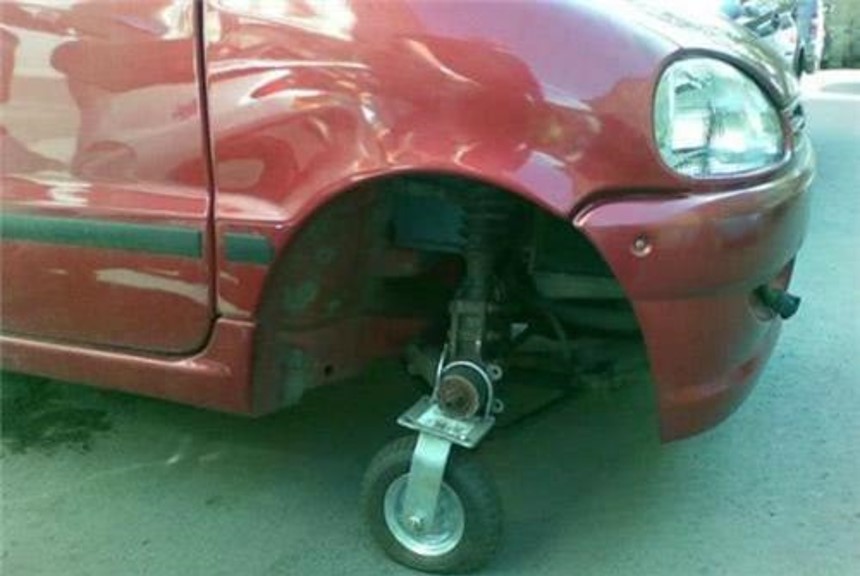
There are loads of accessories out there, optics, lights, lasers, bipods... you just need to remember that when you have a high-performance rifle, you won't get the best results by putting inferior accessories on it.
|
|
|
|
|
If you are an AR owner, I STRONGLY recommend going to a class specific to this kind of shooting, AND keeping an open mind. Our Black Rifle 101 class, either the online or live version, is a step in the right direction. A carbine class with ADC or another credible school can also be beneficial.
|
|
I hope you've found this edition of the newsletter helpful, but please feel free to email or message me if you have any questions about AR accessories or shooting techniques.
|
|
|
One last thing...
|
I received a lot of messages this week from folks who missed our defensive mindset online class. Because of that, we're going to try it one more time, next week: Wednesday, February 28 from 6:00 PM to 9:00 PM Mountain Time.
|
|
|
|
|
|
|
|