|
|
DEFENSIVE CARBINE ELEMENTS
|
|
|
|
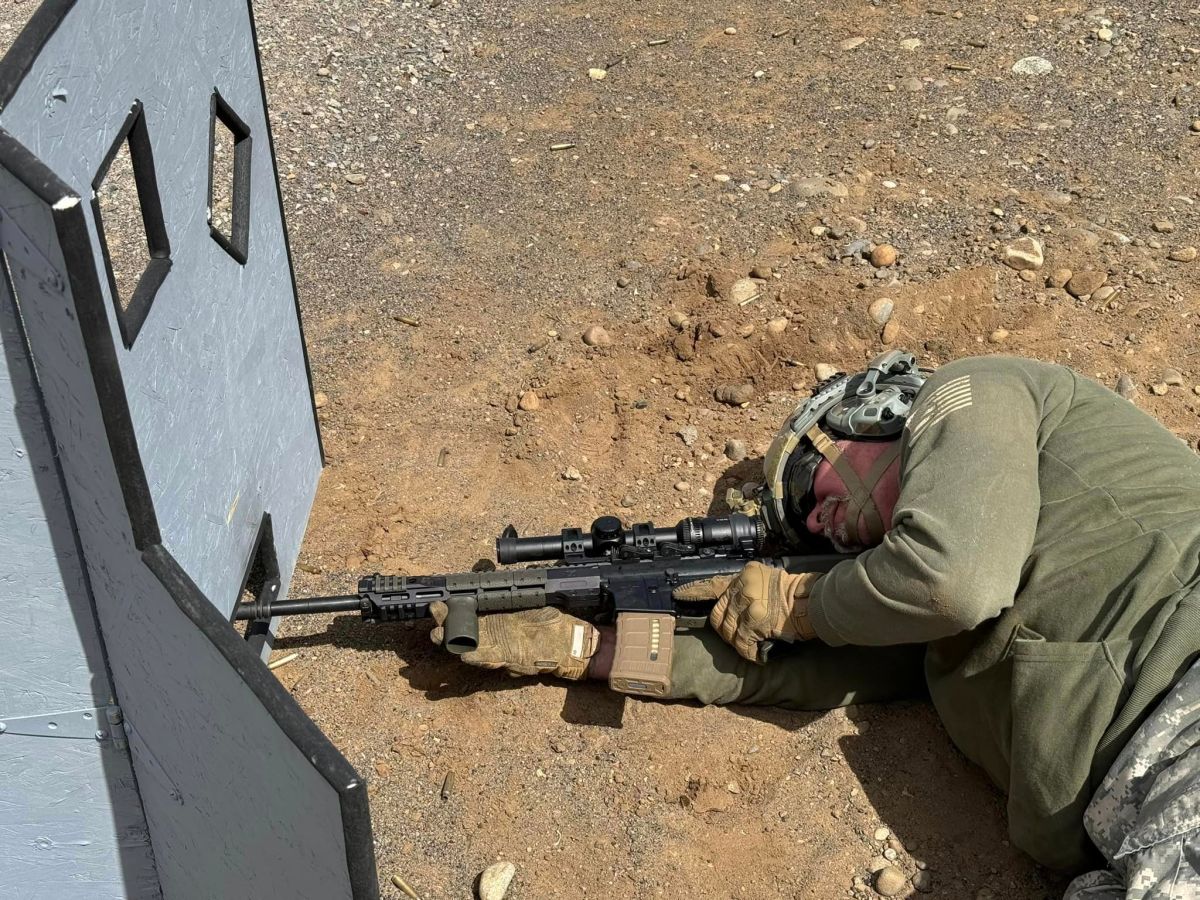
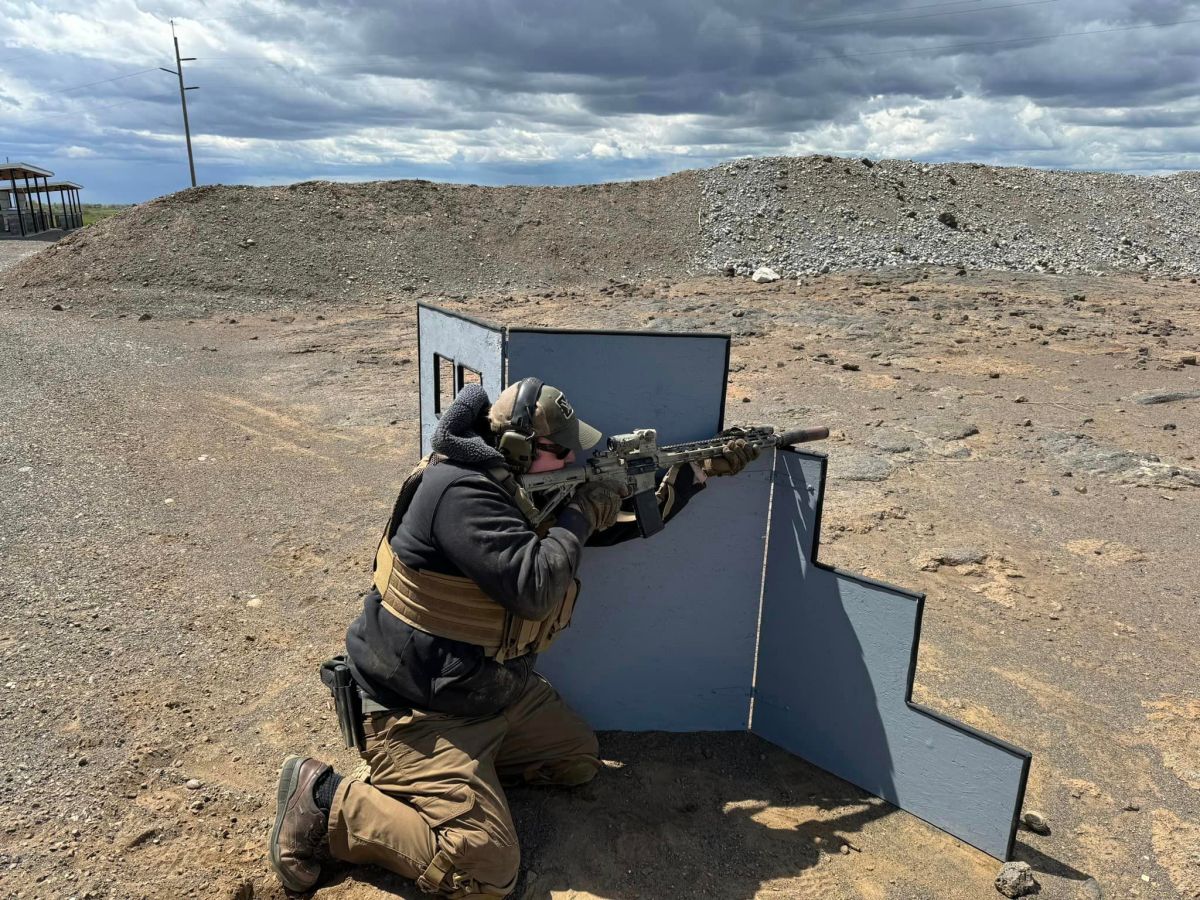
Our first 1-day Defensive Carbine Elements class turned out to be a great class, despite a little wind and some rain late in the afternoon. We must have piled 100 pounds of lava rock on the target stands to keep them from blowing over. Still, we accomplished all class objectives and spent a lot of time putting our new barricades to good use.
|
|
|
|
Years ago, when Instructor Jeremy Decker and I were brainstorming ideas for our firearms training company, we decided to name our classes "Defensive Elements."
|
|
In our after action review this weekend, there was a remark made that this class focused on the fundamentals more than applications. Perfect.
|
|
|
|
With applications-based training (usually endless scenarios) we can easily play the “what if?” game into the hundreds or thousands of permutations. The more detailed and specific we get, the more specialization is needed to answer those “what if?” questions. Just because a scenario plays out one way one time, doesn't mean it will play out exactly that way a second time - even with the same people doing mostly the same things. It especially won't play out the same way given a different cast of characters, location, timing, etc... there area just too many variables. Some of you have probably heard me remark before that our reality is not deterministic (always producing the same results given the same inputs), it is stochastic and probabilistic. The statistics don't tell us what will happen, they tell us what might happen.
|
For an aggressor, like an assault team planning a raid on a specific target, they can rely on intelligence about the target: walls that need to be breached, egress routes, expected resistance, armaments, numbers, and objectives. Those details limit the permutations somewhat which allows for a certain amount of specialization in gear, techniques, and training scenarios. As armed citizens constrained to a defensive (reactive) paradigm, we don’t have the luxury of all those intelligence reports and our objective is to prevail regardless of the circumstances, numbers, or location – back to those thousands of permutations of “what if?”
|
One of the downfalls of traditional martial arts is that it involves hundreds of techniques to counter hundreds of specific attacks. In a lifetime of study, one might be able to memorize these. In practice, Hick's Law steps in: the more choices a person is presented with, the longer it will take for them to make a decision. Bruce Lee’s system of Jeet Kun Do was one of the early adaptations that focused on simplification. It emphasized practicality, efficiency, and flexibility rather than hundreds of specific techniques. Applying this philosophy to the way of the gun means we strip away all those specific “what if?s” until what remains are the fundamentals, or elements of:
|
- keeping the rifle functioning,
- practical accuracy,
- gaining tactical advantages through position and movement,
- gear configuration for maximum efficiency, and
- creative adaptation to whatever situation we find ourselves in (which is why awkward shooting positions from behind barricades are effective training tools).
|
|
AFTER ACTION REVIEW:
|
Every class is somewhat different and I think it's important to share these observations and document them for future reference. One of the biggest obstacles shooters faced in this class is still their equipment. This is a self-inflicted challenge because it is easier to buy stuff than to practice using it and we are all guilty of that to some extent.
|
Magazines are a very common weak point for AR's. There's a reason I use metal magazines. Plastic mags are iffy - some work better than others. Regardless of magazine type, loading them to 28 rounds instead of 30 rounds means easier seating and more reliable feeding. I recommend a belt-mounted magazine pouch for holding mags and a light chest rig if it's necessary to carry more than 1 or 2. If plate carriers or body armor are a part of your strategy, training with these to know their weaknesses and how they affect your speed and mobility is important.
|
Slings are a personal preference thing, but for most shooters I recommend a quality 2-point sling. Single-point slings don't hold the rifle or carbine as securely as a 2-point sling and they typically let the rifle hang too low, which is a disadvantage, especially during rifle to pistol transitions. Slings should be relatively simple in design and easy to use. If you are fighting with your sling, it might be time to switch it out with something better. A properly adjusted 2-point sling holds the butt of the rifle between 1 and 2 "fists" below the chin. When released, the rifle should naturally point down within the "safety circle" or roughly 1-meter circle around the shooter's feet.
|
Sights and Optics are vital equipment. They need to be solidly-mounted and durable. Some of the disadvantages I've seen with some of the lower-cost red dot or green dot optics are weak mounts, short battery life, and inadequate marking on the adjustment screws (no arrows to indicate left or right, up or down, and no click values). Low-power variable optics and low-magnification prismatic sights are popular for their intermediate range capabilities, but they aren't like red-dot sight when it comes to speed at close-quarters or accessibility in awkward field shooting positions. Learn how to run iron sights. One shooter this weekend ran the whole class with iron sights and had great results. ALL of the awards I won for competition rifle shooting were achieved with iron sights. The first 2 carbine classes I ever attended, I shot with iron sights. A reasonable set of iron sights is cheaper, better, and more reliable than a low-budget red dot. Think about that before grabbing that $50 gun show red dot.
|
Ambi Selectors are advantageous, even for right-handed shooters.
|
Enhanced Charging Handles are a vast improvement over the GI charging handles and are worth the investment.
|
Lubrication and cleaning! keep the guns well lubricated and they will keep running even if they are filthy. When was the last time you disassembled your bolt carrier group? Scraping the carbon off the inside bolt radius occasionally and lubricating the cam pin will keep things running smooth.
|
Fitness: Getting into and out of field positions means a lot of up and down. When we get fatigued or stressed, these movements get sluggish. Injuries and loss of flexibility with age severely complicates our ability to use shooting positions effectively. No matter where you are physically, it is almost always possible to make marginal improvements. Do some yoga, get some stretching in, have a daily routine involving basic calisthenics, and practice the field shooting positions. This not only builds strength, but increases efficiency. One of the shooting fundamentals is our breathing. If we are winded because we are moving inefficiently and maybe our cardio is a bit lacking, it will have a profound effect on accuracy. The more heavy gear that is worn, the heavier the rifle, the more energy the shooter will expend. Work on a reasonable level of fitness.
|
|
The intended use of the firearm and the type of shooting activity should dictate the configuration and accessories. Or, in simple terms: the mission drives the gear. As for the shooter, we don't always know what kind of situation we will have to deal with. Fitness helps, but efficiency, strength in the fundamentals, and problem-solving skills or adaptability can help us prevail against extreme odds.
|
|
|
NEW ADC SHIRTS AND HATS
|
|
|
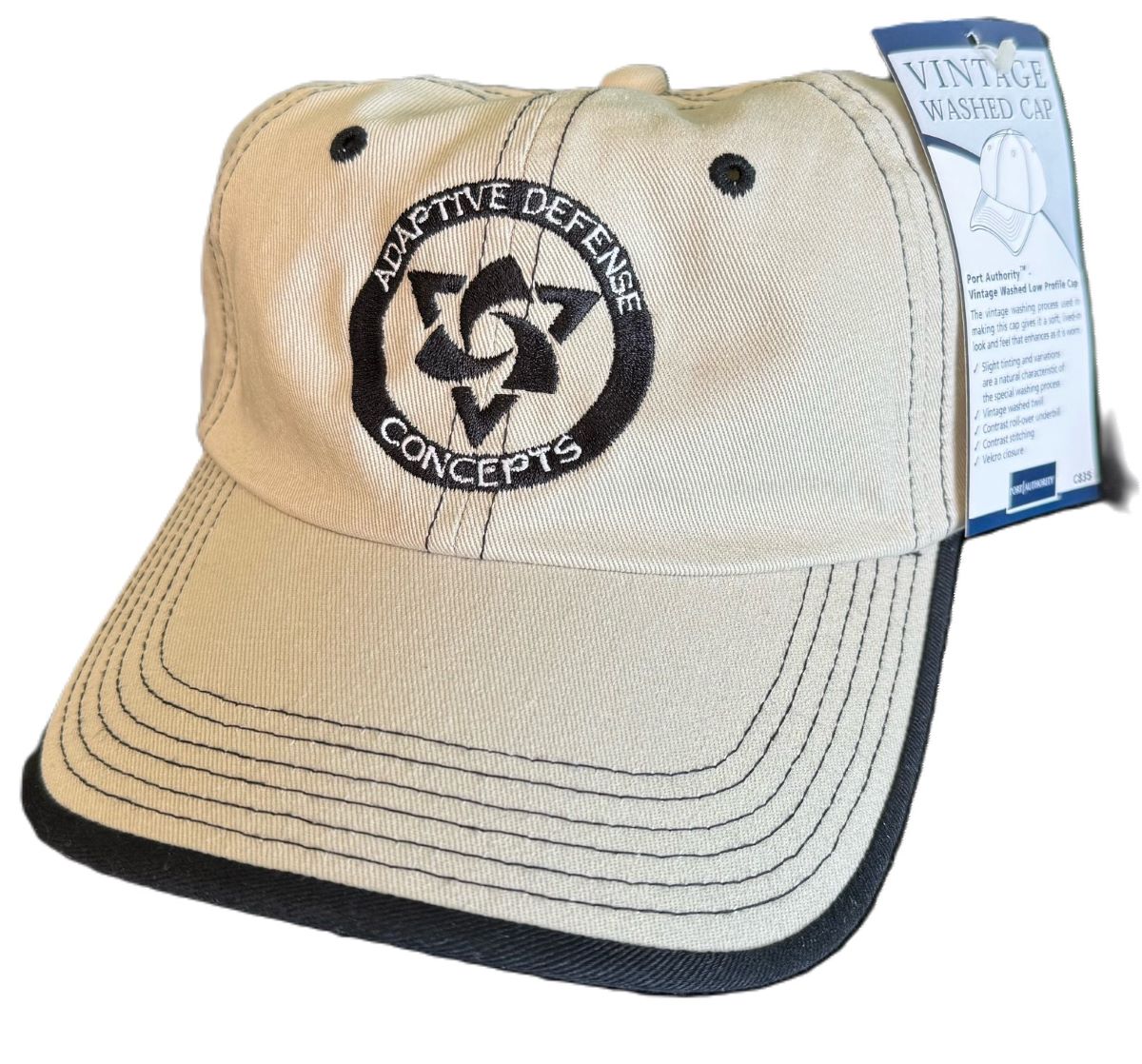
ADC logo Hat
|
|
Vintage Washed Twill Cap with ADC logo. Velcro closure.
|
$20.00 +tax (where applicable)
|
|
|
|
|
|
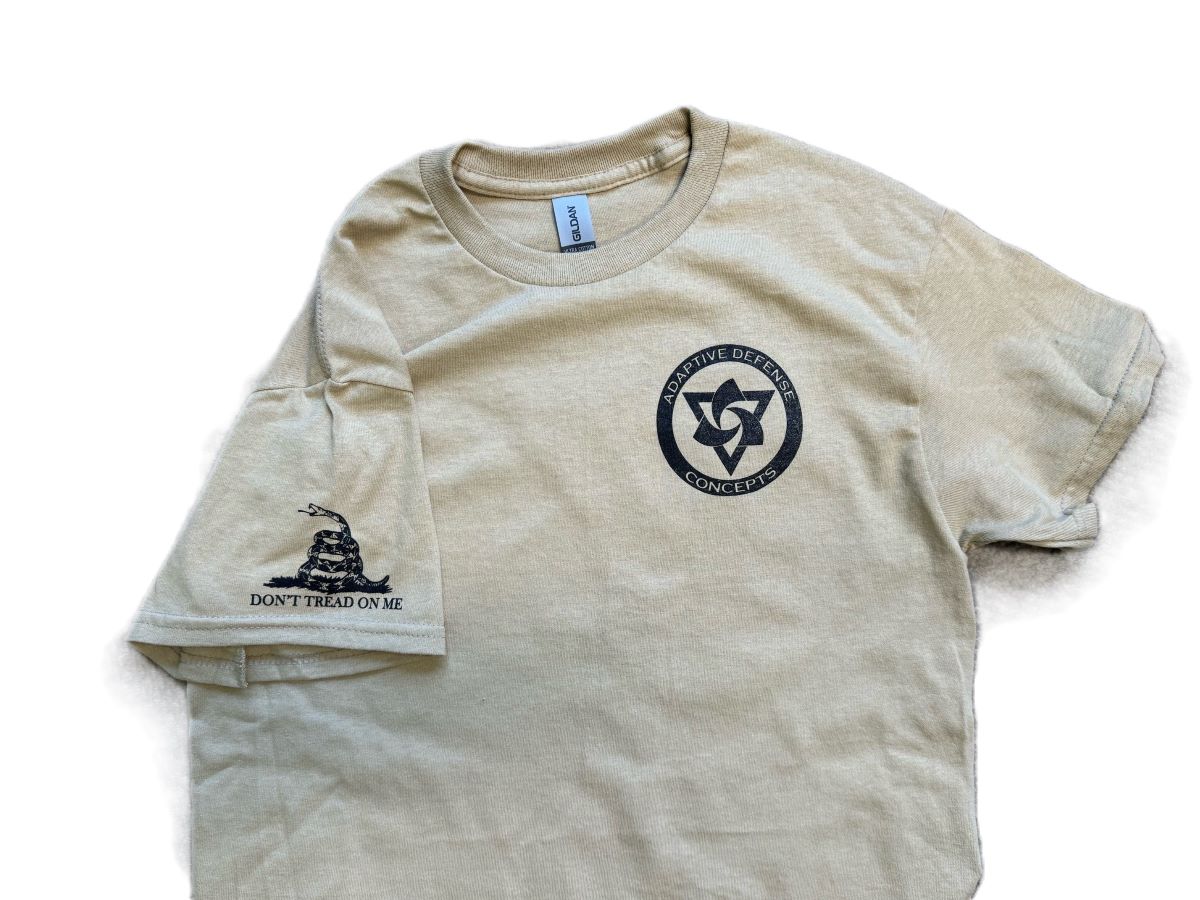
ADC Cotton T-Shirt
|
|
Available in Small, Medium, Large, XL, and XXL. $20.00 +tax (where applicable)
|
|
|
|
|
|
SWAG pack
|
|
Includes Hat, T-shirt, Shield patch, and Glow-in-the-dark patch.
|
$52.00 Original price was: $52.00.$40.00Current price is: $40.00. +tax (where applicable)
|
|
|
|
|
CLOSING THOUGHTS
|
The four firearms safety rules (as adopted by ADC) are:
|
- Know the condition of firearms in your possession, treat all guns as if they are always loaded.
- Don't cause or allow the muzzle to point or sweep anything you aren't willing and justified to kill, hurt, destroy, or pay for.
- ON target - ON trigger, OFF target - OFF trigger. Keep your finger off the trigger until the sights are on the target and you are ready to shoot.
- Know where your bullets will GO, know where your bullets will STOP.
Violating ONE of these rules can result in surprise and embarrassment, violating TWO or more of these rules simultaneously usually has much more serious consequences.
|
In the firearms world, there are people who talk about having "ADs" or Accidental Discharges, and others who (usually more correctly) call them "NDs" or Negligent Discharges. In the armed professional world, I have also seen the term "Unauthorized Discharge" used as it covers both unintentional gun firings, and intentional ones that weren't permitted by circumstances or policy.
|
Semantics aside, if a firearm discharges when it wasn't supposed to, more often than not, it is because the person handling it violated one of the four fundamental firearms safety rules - usually Rule #1 or Rule #3. There are four rules because people are fallible. People make errors. How many errors have you made already today? It might have been something simple like entering a password incorrectly, or turning on the wrong switch for a light, dropping or breaking an item... Even though I read and re-read every one of these newsletters before sending them, I always find grammatical or spelling errors later. Likewise, for those individuals who handle firearms, unintentional discharges (whether you call them ADs, NDs, or UDs) are something you can expect to observe or experience at some point. If the other 3 firearms safety rules are being solidly adhered-to, an ND can be scary or embarrassing, but won't likely involve serious injury. If 2 or more of the rules are broken, the consequences can be life-altering.
|
In over 16 years of being a firearms instructor I can count the number of negligent discharges I've witnessed in my classes on one hand. It's a very rare event, but it does happen. Through the implementation of other controls, in-depth risk analysis and mitigation, and no small amount of divine providence, none of these events has ever resulted in an injury. Regardless, we go into each class prepared with emergency plans and trauma supplies because people are fallible and live-ammo training classes involve a certain level of risk. According to the statistics, the probability of being injured or killed in firearms training is still less than that from common activities like biking, swimming, and driving, but it is a hazard we must always hold in high regard.
|
|
The safety of the training environment relies on everyone paying scrupulous attention to detail. Simple, efficient gear, promotes safe behaviors by reducing the number of details we have to focus on. If you are fighting with slings, optics, magazines, load-bearing gear, holsters, ill-fitting PPE, or a weapons system that just doesn't fit the shooter, it will be a distraction from safety, as well as an impediment to accuracy and efficiency. I recommend you take time to evaluate your gear and your technique. Strip away the non-essential. It will make you a safer and ultimately better shooter.
|
|
|
|
|
|
|
|